

 Return to
Exploring the practicalities of setting up a Fishery Improvement Project (FIP) and the benefits to companies involved, MarinTrust event (20 October 2026) gathered speakers from around the world to share experiences. Introducing the MarinTrust Improver Programme, Impacts Manager Nicola Clark stated “the most important takeaway is that the Improver Programme is not a Standard, but a structured process of improvement for factories who do not meet the requirements of the MarinTrust Factory Standard. It provides an improvement process for the fishery, and the production facility may then apply to use this improving raw material; and must pass the MarinTrust facility audit in order to gain acceptance onto the programme. By focusing also on the factory, MarinTrust is driving improvements both at the fishery and factory and traceability in between.”
Clark noted that while there is a general stagnation in the number of FIPs globally, MarinTrust FIPs under the Improver Programme continue to grow, with 7 active FIPs and 23 Improver Programme Factories, representing 4% of global marine ingredient production. She added that the FIP mechanism is evolving and moving further down the supply chain, as well as community catch FIPs which focus on social improvements.
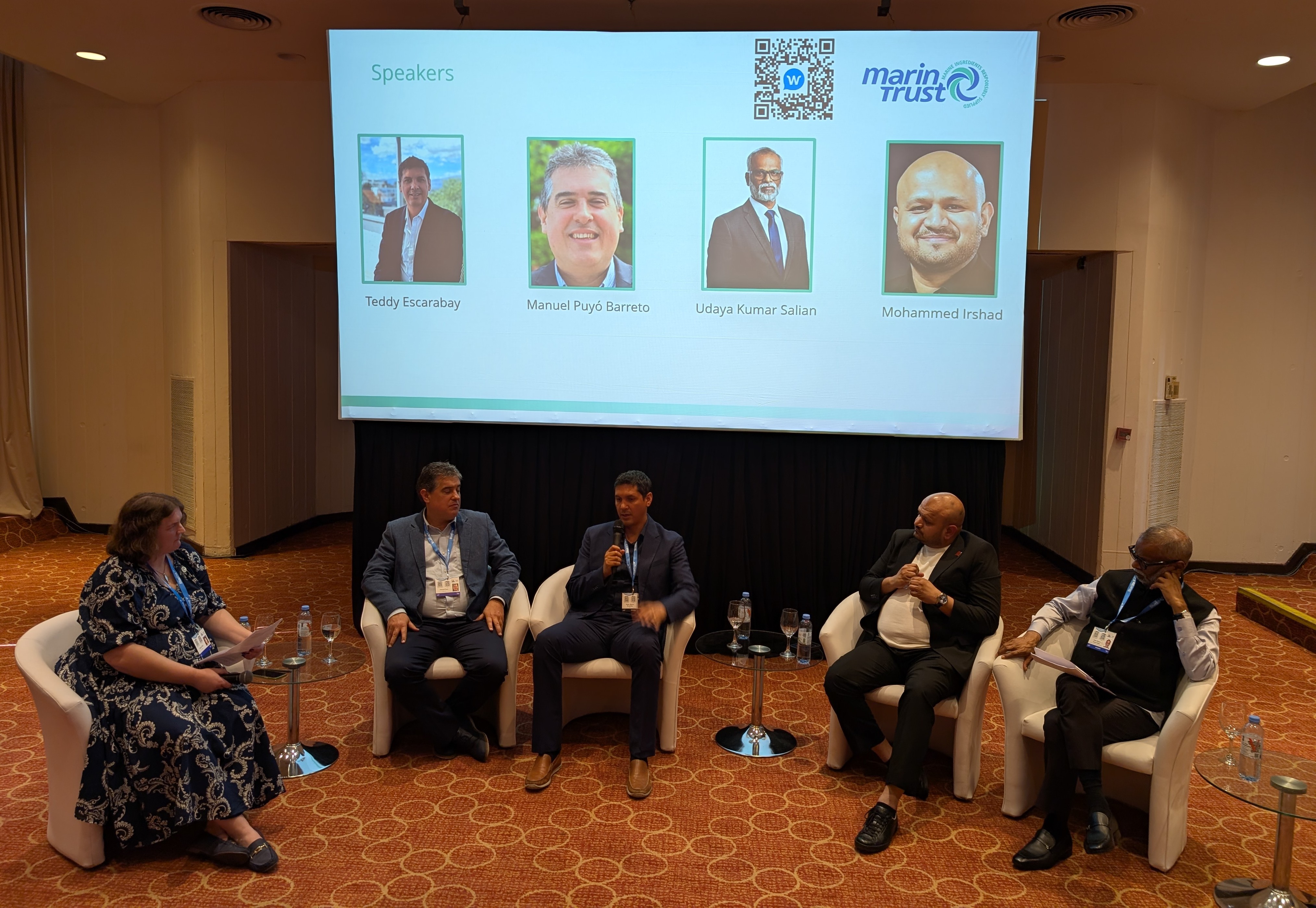
Ecuador FIP: Completed in January 2026
MarinTrust Ecuadorian Small Pelagics FIP was completed in December 2025 and Teddy Escarabay, Latin America Fisheries Director for the Sustainable Fisheries Partnership (SFP) provided insights. Launched in 2018, the FIP involved 23 supply chain companies, led by the Cámara Nacional de Pesquería (CNP), fishmeal & fish oil producers, aquafeed companies and traders, with technical support from SFP and public research institutions. Escarabay, stated that the most important part of setting up a FIP is setting the budget, which SFP supported with, along with strengthening the wider industry support. A stock assessment has now be carried out, alongside participatory governance, responsible fishing programme with onboard data and monitoring of Endangered, Threatened, and Protected (ETP) species. The final fishery assessment was approved in 2025.
Providing insights from a company involved in this FIP, Manuel Puyó Barreto, the Regional Procurement Manager at Vitapro. Back in 2016, Barreto noted that the local fishery could not be certified and fishmeal and fish oil didn’t therefore comply with the BAP Standard. Local ingredients met quality standards, but control and governance were missing. The FIP started as a collection action to transform the local sources, and it was funded 50% by CNP and 50% by feed manufacturers, and developed by SFP. In parallel, the Global Sustainable Supply Chains for Marine Commodities project (GEF, with UNDP support) prioritized the small pelagics fishery.
Barreto concluded that “the outcome has gone beyond an approved assessment: research, governance and management practices were strengthened. For feed producers, the benefit is a more traceable local source that facilitates (but does not guarantee) ASC, BAP and GLOBALG.A.P. certifications. No one could do this alone, we had a strong chain of stakeholders and the value now extends to Ecuadorian shrimp and its buyers”.
Representing the Small Pelagic Purse Seine Fisheries – Karnataka State FIP (India)
Udaya Kumar Salian, from Yashaswi Fish Meal and Oil Company provided an overview of the FIP, which aims to enhance fisheries management in the region by bringing together key stakeholders from both the public and private sectors. The journey started with just two fishmeal factories and it has now evolved to 7 factories, with more now applying. Accepted into the MarinTrust Improver Programme in 2024, the FIPs progress has been recognised through the SFP B rating. Salian added that “the FIP has helped strengthen our access to international markets, particularly the European market, and we have seen interest from new international buyers and additional demand for products connected to a more credible and transparent fishery improvement process. The drivers from this FIP have been from the fishing communities and it has therefore become part of the fishery itself.” He concluded that “Our journey has moved from: ‘We need certified raw material’ to ‘We need to improve the fishery’. And now we are moving towards: The fishing community itself wants to be part of that improvement and that in our view, is the real value of a Fishery Improvement Project.”
Oman small pelagics FIP
In Oman, Mohammed Irshad from Dhofar Fisheries & Food Industries Company showed that this FIP, accepted in 2024, was driven by discussions from feed producers and the FIP has then brought fishmeal and fish oil factories together on one platform and created a unified industry voice. The FIP needs to be a common benefit for all, both sustainably and commercially. He added that the FIP concept has been expanded to include all participants across the fishery, and facilitated engagement between industry, the Ministry of Fisheries, scientists and international buyers. Irshad added that “the first factor that we did as part of the fisheries management plan was to have a 4 month fishing ban and we are closely monitoring stocks from now on. The other important part of building collaboration is to hold workshops with stakeholders and visit other countries to learn from best practices.”
The FIP has enabled exports of MarinTrust Improver Programme products during the 2025/26 fishing season and established an official oil sardine fishing season in Oman, supporting improved fisheries management. He concluded that “this FIP has demonstrated the commercial benefits of participation, strengthened the industry association as a common platform, and secured Ministry of Fisheries support by making FIP participation a condition for EU-certified factories operating in Oman’s fishmeal and fish oil sector.”
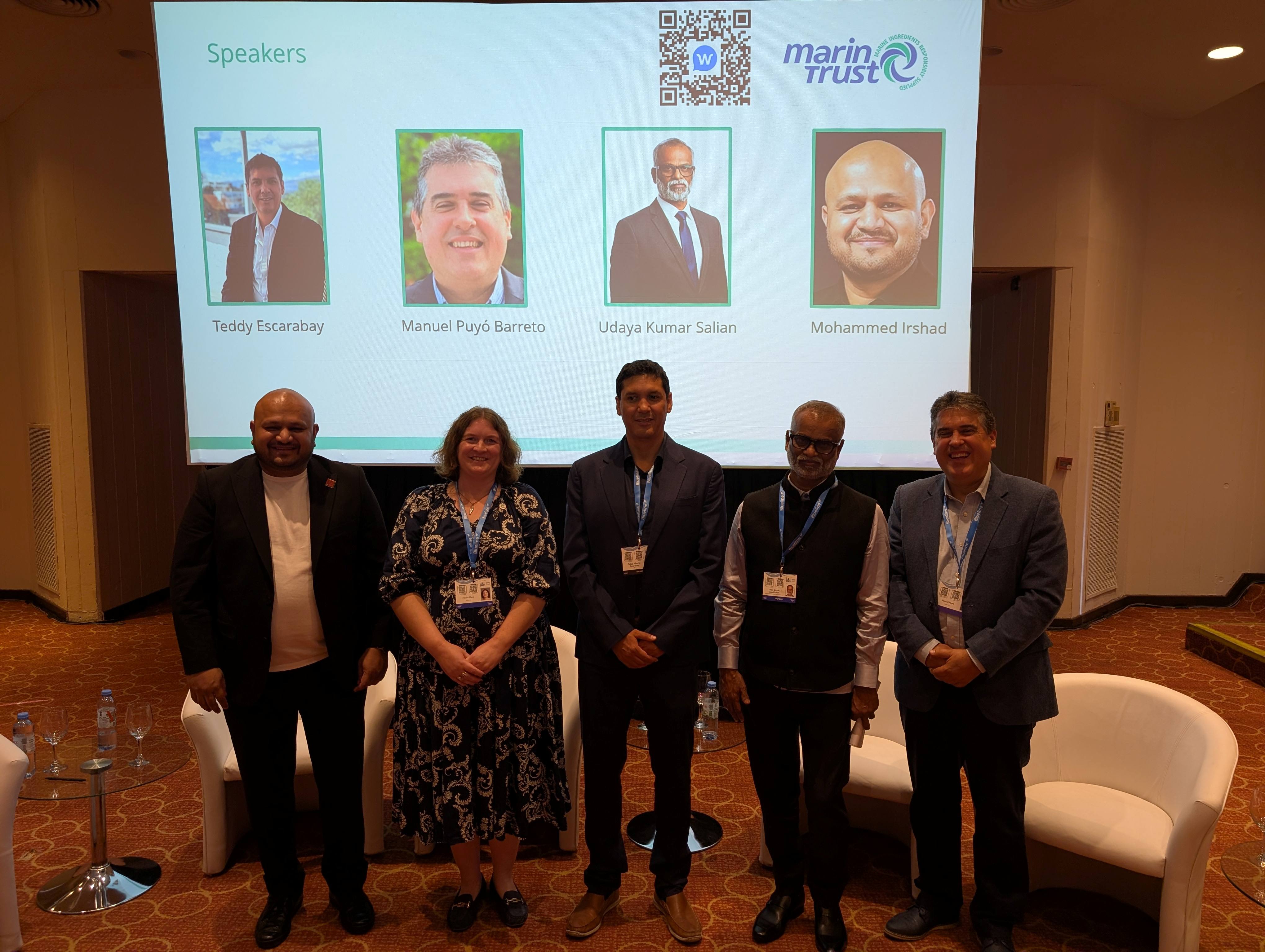
Looking forward
Irshad noted that “we are looking at expanding the Oman FIP into other species, we used to have mostly artisanal vessels but this is now moving to industrial vessels, bringing in new species but we need to manage and protect these fisheries.” Regarding government engagement, Irshad stated that they invited government officials to attend IFFO’s Annual Conference to help them better understand the role of the wider industry. He added that there were concerns about the balance with human consumption, so improving this availability and controlling supply has helped calmed these concerns.
Escarabay stated that in Ecuador “now we have completed the FIP, we are planning to go for MSC certification so we can comply with ASC certification requirements, which is essential for our shrimp producers. MarinTrust has provided the first step on this journey.” Barreto added that Vitapro has certified all their plants for ASC and this was only possible with the MarinTrust FIP. He added that the FIP has helped us diversify our business to different markets making the industry more resilient. Barreto noted that “while FIPs are well understood in Ecuador, there is a misunderstanding in other countries and markets so we need more engagement and workshops. It has helped grow our business and has been a very beneficial process.”
Udaya explained that their FIP in India, had a unique situation with the leading role of government, which meant a slower start but then once set up it was easier to implement. Looking forward, Udaya stated that “other fishing industry are now looking at organising FIPs so this has been a good example for the wider industry. With the potential overlap between FIPs we will be coordinating the data gathering and looking at merging the FIPs”.
Escarabay highlighted the increasing interest to expand FIPs to include social assessments, plus labour and economic impacts. “Sustainability is a very broad concept and it is hard to include all these aspects under one programme. We need to expand our indicators to social economic indicators and Standards are now starting to include them which is helpful. We also need to communicate more widely the successes and efforts of these FIPs to show the positive impacts and grow support”.