

 Return to
 "El impulso ha continuado, con un crecimiento tanto en nuestros Estándares como en nuestro Programa de Mejoramiento, y el equipo de MarinTrust también ha crecido para satisfacer la demanda. Ha sido un año emocionante con la transición a la última versión del Estándar de Fábrica, con todo el progreso que conlleva para la industria. La trazabilidad y la garantía son nuestra columna vertebral, y si bien requieren un sólido sistema de apoyo, nos permiten demostrar el impacto de MarinTrust en el impulso de mejoras para los productores y usuarios de ingredientes marinos. Este informe ofrece un panorama de nuestro trabajo y destaca áreas clave de impacto, como el crecimiento de los subproductos, que ofrecen a nuestra industria una oportunidad única para innovar y reducir los residuos, y que nuestra nueva norma fomenta."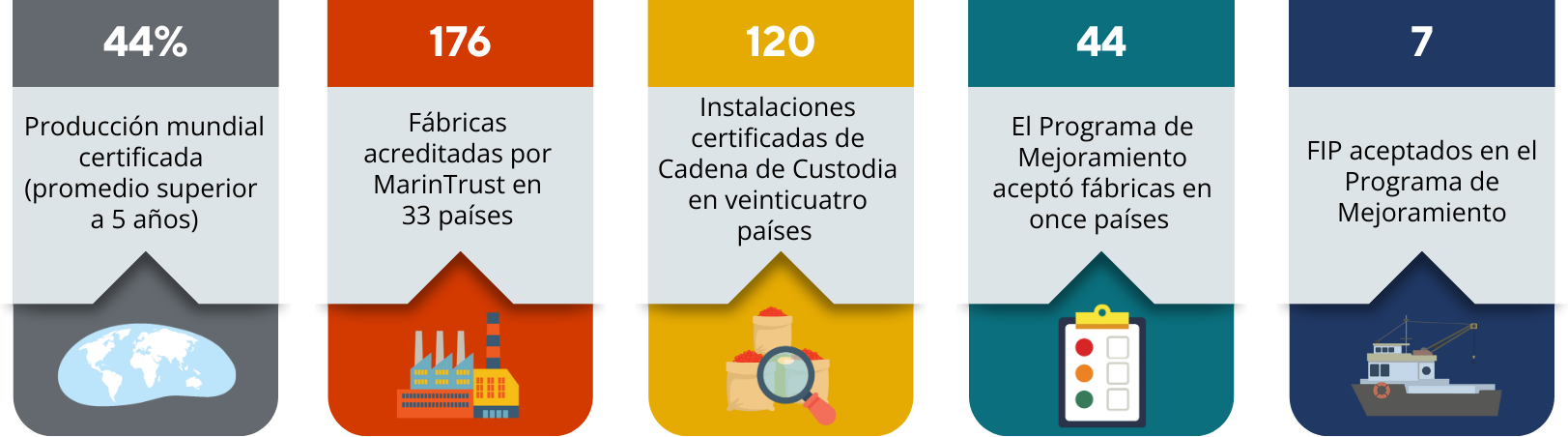
Los datos que se presentan aquí son de diciembre de 2025.
Vea los informes anuales anteriores aquí
Contenido
- Áreas de crecimiento
- The Factory Standard Versión 3
- Cadena de Custodia (CdC) de MarinTrust
- Impactos
- Difusión
- Gobernanza
- El equipo
Áreas de crecimiento
Para finales de 2025, la mayoría de las fábricas certificadas operaban bajo la última versión de la Norma (V3), con fábricas en nuevos países, como Colombia, Ghana, Portugal, Omán, Túnez y Turquía. La inclusión de estos países demuestra la continua expansión global del Programa. También existe un creciente interés en agregar valor a los subproductos y en el desarrollo de nuevas fuentes de ingredientes dentro del marco de MarinTrust, como ocurre con los residuos de salsa de pescado. Para la Norma de Cadena de Custodia de MarinTrust, se incorporaron 16 nuevas instalaciones, y los países que se agregaron fueron Australia y Sudáfrica. El Programa de Mejora contribuyó a la finalización de un exitoso Proyecto de Mejora Pesquera (FIP) de MarinTrust, que abarca pequeños pelágicos en Ecuador, y un nuevo FIP en Omán.
Descubra más cifras clave aquí.
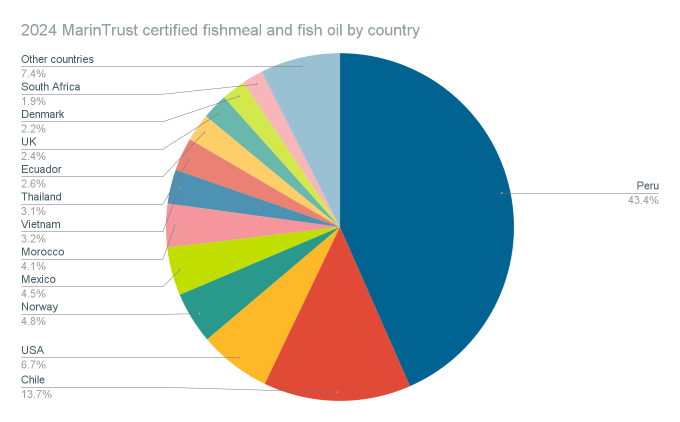
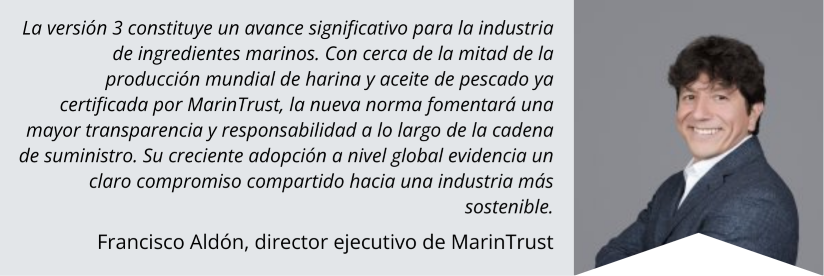
Con casi la mitad de la producción mundial de harina y aceite de pescado ahora alineada con MarinTrust, la Norma sigue siendo un impulsor clave de las prácticas responsables y la confianza del mercado. El gráfico circular a continuación muestra la distribución por país de la producción de harina y aceite de pescado certificada por MarinTrust en 2024.
Estándar de Fábrica
 La transición a la última versión del Estándar de Fábrica de MarinTrust, Versión 3 (V3), finalizó el 1 de mayo de 2025 y la mayoría de las empresas ya se han migrado a esta versión: 111 fábricas estaban certificadas bajo la V3 a finales de 2025 y 75 restantes bajo la V2. Este es un gran avance para la industria, ya que esta última versión aumenta la accesibilidad a ingredientes marinos de origen y producción responsables y fomenta el uso creciente de subproductos. El estándar sienta las bases para la trazabilidad completa de los ingredientes marinos, con la recopilación de nuevos datos sobre el impacto ambiental y social, tanto en la fábrica como a bordo. Junto con el desarrollo de la V3, MarinTrust ha revisado los criterios de evaluación de subproductos y peces enteros en la pesca.
Descubra más sobre nuestro Estándar de Fábrica
Estándar Cadena de Custodia MarinTrust (CoC)
El estándar de Cadena de Custodia de MarinTrust se aplica actualmente a la Versión 2. Actualmente, existen 120 instalaciones certificadas en 24 países, y 16 empresas solicitaron la Cadena de Custodia en diciembre de 2025. Se ha simplificado la información del Estándar para mayor claridad a los solicitantes y titulares de certificados.
En 2025 se inició una revisión del Estándar y la Versión 2.1 se publicará en 2026.
Obtenga más información sobre nuestro Estándar de Cadena de Custodia.
Impactos
MarinTrust impulsa mejoras en toda la cadena de valor de los ingredientes marinos, desde su abastecimiento, producción y trazabilidad hasta su uso final. El impacto se logra a través de nuestros dos Estándares y de nuestro Programa de Mejoramiento, que implementa Proyectos de Mejora Pesquera (FIP) de los que se abastecen las fábricas de ingredientes marinos. A continuación, se presenta un resumen de nuestras áreas clave de trabajo y crecimiento.
Programa de Mejoramiento MarinTrust
 El Programa de Mejoramiento de MarinTrust beneficia a toda la cadena de suministro, proporcionando trazabilidad desde la pesquería en proceso de mejora hasta el usuario final, como los productores de piensos, a través de una cadena ininterrumpida. Esto se logra mediante el desarrollo de un Proyecto de Mejora de Pesquerías (FIP) por parte de los productores de ingredientes marinos y las partes interesadas, seguido de un riguroso proceso de desarrollo y un plan de acción. Mediante mejoras, como en la gestión de pesquerías, la infraestructura de las fábricas o en aspectos operativos, el objetivo es cumplir con los requisitos del Estándar MarinTrust al final del proceso. A noviembre de 2025, había 44 instalaciones aceptadas por el Programa de Mejoramiento de MarinTrust en 11 países diferentes. La lista completa de instalaciones aceptadas está aquí.
Impulsando mejoras en la pesca
Si bien MarinTrust no certifica pesquerías, establece el estándar para que las instalaciones de producción de ingredientes marinos sean certificadas por organismos de certificación externos. Un requisito clave para dicha aprobación es que la materia prima provenga de pesquerías gestionadas responsablemente. MarinTrust reconoce los Proyectos de Mejora Pesquera (FIP) dentro del Programa de Mejoramiento, que identifica áreas específicas de mejora y crea un grupo local de interesados para responsabilizarse del trabajo y garantizar la perdurabilidad de las mejoras.
Un área clave de enfoque en los últimos años ha sido la pesca multiespecie (en Tailandia y Vietnam), donde MarinTrust está adoptando un enfoque innovador para la gestión basada en ecosistemas, un área donde los modelos tradicionales de una sola especie se ven cada vez más desafiados por la variabilidad climática y la dinámica marina cambiante. Los criterios de evaluación de estos FIP se han diseñado para satisfacer las necesidades de pesquerías complejas que no se ajustan al enfoque convencional de evaluación pesquera, y nuestra prioridad es desarrollar soluciones prácticas para desafíos complejos, garantizando un suministro a largo plazo de ingredientes marinos de origen responsable.
A continuación se muestra una lista de los FIP de MarinTrust actuales y completados (en 2025) con sus actualizaciones recientes:
:
Obtenga más información sobre nuestros FIP de MarinTrust aquí
A continuación se destacan otras áreas clave en las que MarinTrust está teniendo un impacto en nuestra industria y nuestros sistemas para medir dichos impactos.



Obtención de subproductos
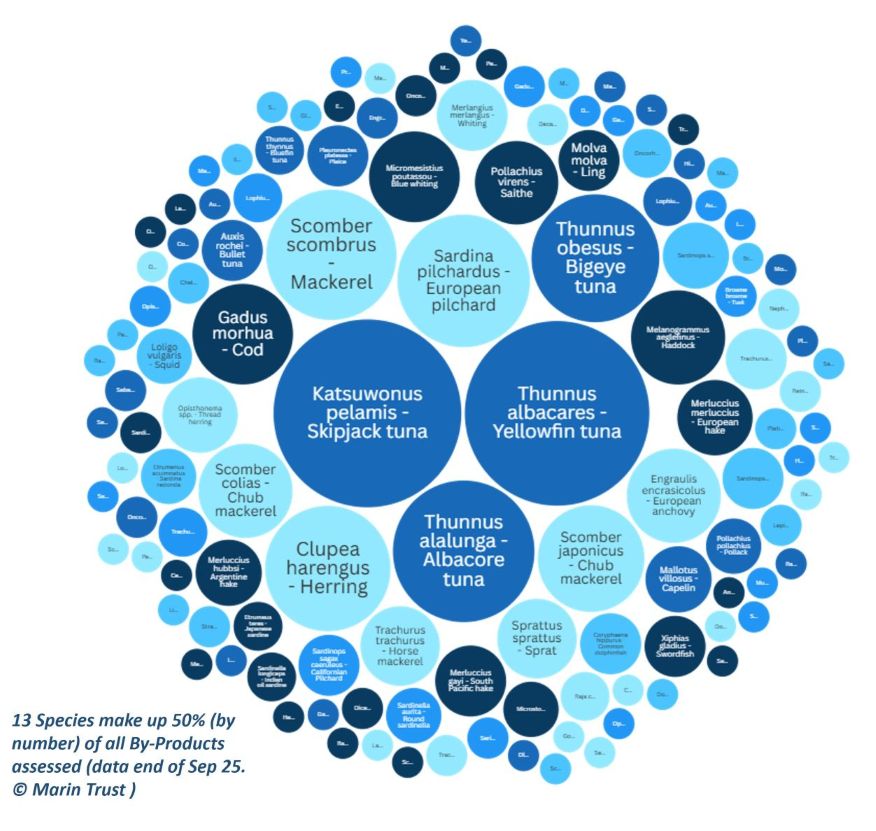
El continuo crecimiento de los ingredientes marinos procedentes de subproductos de pescado ofrece a la industria la oportunidad de innovar, reducir los residuos y alinearse con los principios de la economía circular. Sin embargo, es fundamental que el uso de subproductos cuente con una certificación sólida que garantice la trazabilidad y el abastecimiento responsable de estas materias primas. La versión 3 del estándar de fábrica busca aumentar la cantidad de ingredientes marinos procedentes de subproductos mediante evaluaciones exhaustivas de terceros. Desde su lanzamiento en mayo de 2024, se han evaluado más de 125 especies diferentes de subproductos y se han generado 114 informes de fábrica de subproductos mediante un proceso paso a paso claro y eficiente que verifica los índices de INDNR, las listas de especies en peligro de extinción y el sistema de gestión pesquera. Se ha fortalecido el vínculo entre la evaluación de prerrequisitos y la auditoría, con una evaluación de riesgos de INDNR, centrada en los riesgos del Estado del pabellón, utilizando los Indicadores de Gobernanza Mundial (WGI) del Banco Mundial. Estas nuevas evaluaciones han ampliado los requisitos para los productores, proporcionando seguridad a la cadena de valor con datos precisos de abastecimiento y una mayor visibilidad...
Abastecimiento de pescado entero
Los requisitos de abastecimiento se han reforzado en la versión V3, con una evaluación de los controles de gestión y el impacto en el ecosistema para las evaluaciones de pescado entero. La auditoría ahora incluye elementos clave de datos (KDE) que requieren la recopilación de métricas ambientales y sociales, tanto en la fábrica como en el buque (para quienes suministran pescado entero directamente a la instalación). Actualmente, hay 23 pesquerías de pescado entero aprobadas en el programa MarinTrust.
Encuesta
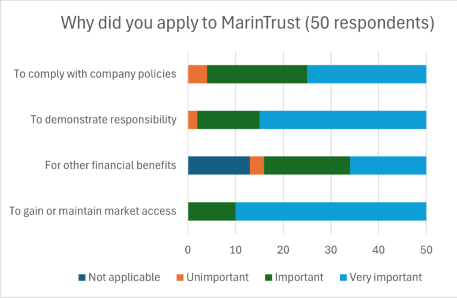
La encuesta anual de 2025 contó con 50 encuestados y mostró que el 96 % (48) de los encuestados consideraba que la certificación/aceptación del Programa de Mejoramiento de MarinTrust mejoraba o mejoraba en cierta medida su acceso al mercado y/o la oportunidad de vender ingredientes marinos certificados. Los factores clave para solicitar la certificación de MarinTrust fueron, una vez más, el acceso al mercado, la responsabilidad y el cumplimiento de las políticas de la empresa (véase el gráfico a continuación).
Trazabilidad
 MarinTrust está proporcionando las bases para los ingredientes marinos para permitir la trazabilidad interoperable desde la fuente hasta el uso final. Identificar y estandarizar los datos es clave para este proceso y la V3 del Estándar de Fábrica incluye Elementos de Datos Clave (KDE) que garantizan que las materias primas que se obtienen se puedan verificar en cuanto a su origen, incluida la pesquería, el proveedor y la granja. Estos KDE siguen lo desarrollado por el Diálogo Global sobre la Trazabilidad de los Productos del Mar (GDST), que proporciona un marco para mejorar la trazabilidad, que abarca la recopilación, el uso, la transferencia y la gestión de datos. MarinTrust apoya la inclusión de Ingredientes Marinos dentro del GDST, lo que ayuda a construir aún más un puente entre la pesca y la acuicultura.
Alcance
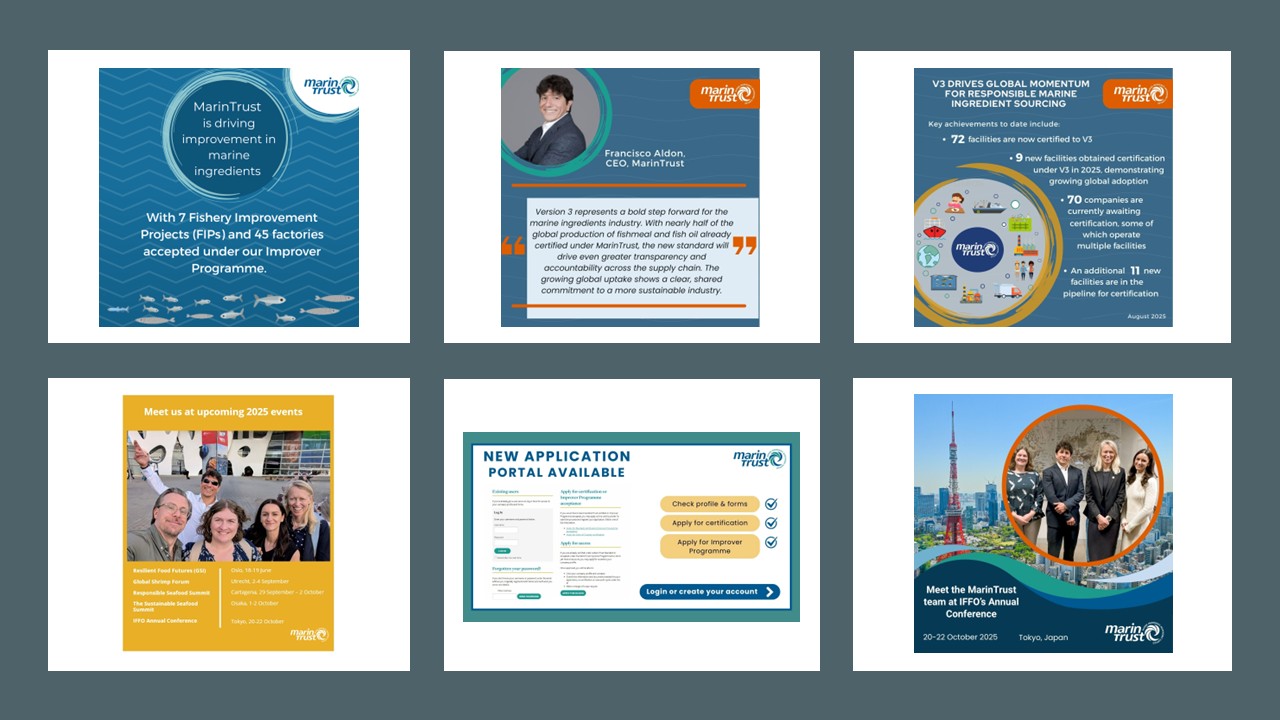
Las partes interesadas de MarinTrust abarcan toda la cadena de valor y, por lo tanto, la interacción se lleva a cabo a nivel global a través de diversas plataformas y eventos. Durante el último año, MarinTrust ha participado en eventos y talleres en todo el mundo, ha visitado fábricas y a las partes interesadas, y ha interactuado directamente con ellas a través de Twitter y LinkedIn. Nuestra interacción con la prensa también sigue aumentando en todos nuestros proyectos.
Explore nuestras áreas de divulgación a continuación:




Eventos
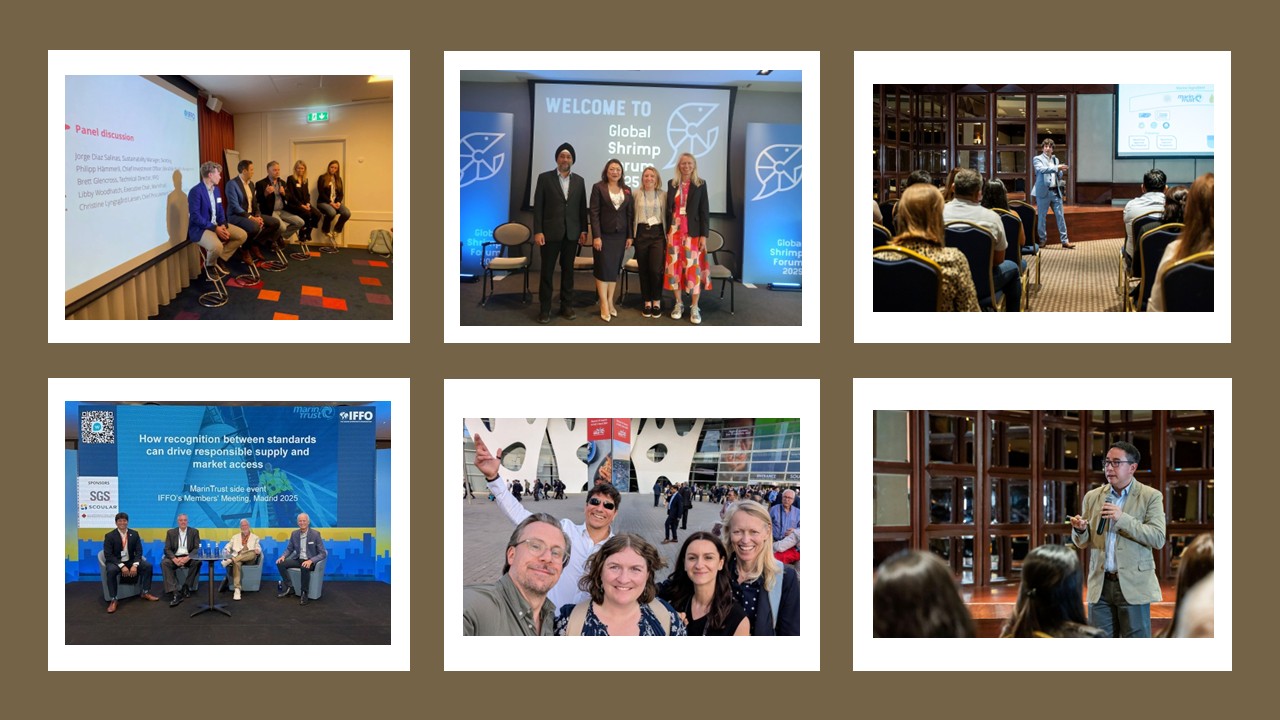
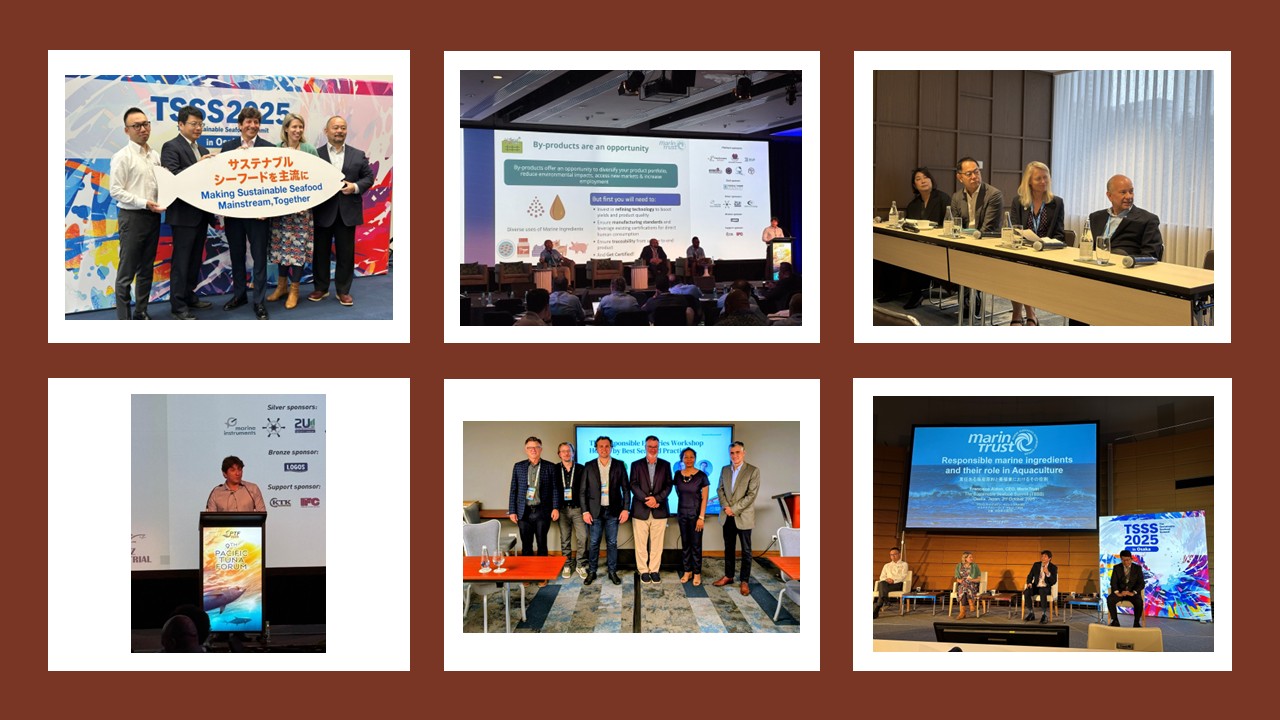
El equipo de MarinTrust interactúa constantemente con las partes interesadas y empresas de todo el mundo, tanto presencialmente como en línea, a través de eventos, talleres y visitas a las instalaciones. Entre los eventos a los que asistió y en los que se presentó se incluyen:
- North America Seafood Expo (Boston, USA)
- Global Seafood Expo (Barcelona, Spain)
- ISEAL Sustainability Policy Forum (Brussels, Belgium)
- Certified Seafood International (CSI) committee meeting
- The Fisheries Management Innovation Group meeting - FIPs
- SeafoodSource webinar - Ecosystem-Based Fisheries Management: Protecting the Future of Forage Fisheries, Aquaculture, and Marine Ecosystems
- Global Shrimp Forum (Utrecht, The Netherlands) – MarinTrust, MSC & ASC side event
- Resilient Food Futures: Charting a Journey for Sustainable Aquaculture (Oslo, Norway)
- Hellenic Aquaculture Producers Organization (HAPO) workshop, (Athens, Greece)
- ASC Nordic Seafood Summit 2025 (Gothenburg, Sweden)
- MarinTrust workshop (Lima, Peru)
- Responsible Seafood Summit (Cartagena, Columbia)
- TSSS 2025 Sustainable Seafood Summit conference (Osaka, Japan)
- 9th Pacific Tuna Forum 2025 (Nadi, Fiji)
- IFFO Annual Conference (Tokyo, Japan) - MarinTrust side event
…
Asociaciones
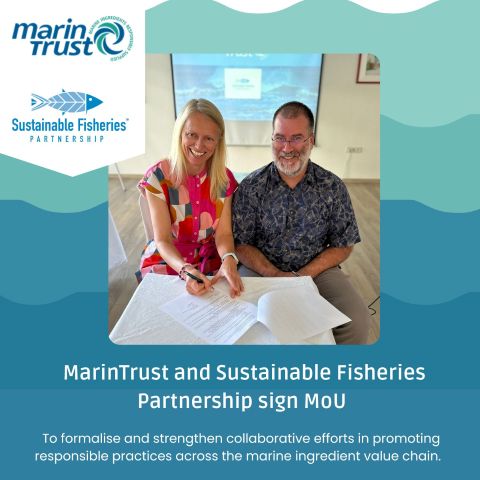
MarinTrust y la Alianza para la Pesca Sostenible firman un Memorando de Entendimiento
El Memorando de Entendimiento se firmó para formalizar y fortalecer la colaboración entre ambas organizaciones en la promoción de prácticas responsables en toda la cadena de valor de los ingredientes marinos.
Reconociendo la naturaleza complementaria de sus misiones, MarinTrust y la SFP acordaron acelerar el progreso hacia objetivos compartidos, entre ellos:
- Gobernanza: Representación continua de la SFP en los comités de MarinTrust, incluyendo el Comité del Órgano Rector, el Comité de Aplicación del Programa de Mejora, el Comité de Supervisión del Desarrollo Pesquero y el Comité Social y Ético.
- Apoyo conjunto a iniciativas como el Proyecto de Pesca del Golfo de Tailandia (GdT) de la FAO, el Proyecto Piloto Multiespecies de MarinTrust, la Mesa Redonda Global sobre Ingredientes Marinos, entre otras.
- Calificaciones del FIP: Integración de las calificaciones del Proyecto de Mejora Pesquera (FIP) de la SFP en el Programa de Mejora de MarinTrust, con la contribución de MarinTrust a los procesos de revisión y modificación. Intercambio de información y perspectivas: Intercambio de datos, redes y experiencia para promover las mejores prácticas y evitar duplicaciones. Esto incluye el uso de datos de FishSource para las solicitudes de certificación de MarinTrust y la exploración del uso de los identificadores del Registro Mundial de Poblaciones y Pesca (GRSF) de la FAO.
MarinTrust reconocido por la FAO por su excelencia técnica en sistemas alimentarios acuáticos sostenibles
 MarinTrust, el programa líder en certificación de ingredientes marinos, se enorgullece de anunciar hoy su reconocimiento por parte de la Organización de las Naciones Unidas para la Alimentación y la Agricultura (FAO) durante su Ceremonia inaugural de Reconocimiento Técnico. Este evento mundial celebró las contribuciones destacadas a los sistemas alimentarios mediante una combinación de conocimiento y cooperación. Los galardonados fueron elogiados por ser un motor de cambio.
MarinTrust fue galardonado en la categoría de Sistemas Alimentarios Acuáticos Sostenibles por su Proyecto Piloto Multiespecies, una iniciativa pionera que se alinea con la estrategia de Transformación Azul de la FAO. El proyecto apoya dos objetivos clave de la FAO:
- Objetivo F3: Promover una gestión pesquera eficaz que equilibre los objetivos ecológicos, sociales y económicos.
- Objetivo V3: Mejorar el acceso de los productos de la pesca y la acuicultura a los mercados internacionales.
"Estamos profundamente agradecidos a la FAO y al Dr. Manuel Barange por este reconocimiento", declaró Libby Woodhatch, Presidenta Ejecutiva de MarinTrust. "Este reconocimiento refleja la dedicación del equipo de MarinTrust y de nuestras partes interesadas para promover el abastecimiento, la trazabilidad y la producción responsables en las cadenas de suministro de ingredientes marinos".
Más información sobre el proyecto piloto multiespecie de MarinTrust en: https://www.marin-trust.com/improver-programme/multispecies-pilot-project.
Mesa Redonda Global sobre Ingredientes Marinos
 MarinTrust ha sido miembro de la Mesa Redonda Global sobre Ingredientes Marinos desde su lanzamiento en 2021. Como miembro, MarinTrust contribuye a explorar vías para una mayor disponibilidad de ingredientes marinos de origen responsable en el Sudeste Asiático y el Sur de Asia. MarinTrust también contribuye a comprender el impacto de la industria en África Occidental y a mejorar la gestión de las poblaciones compartidas de pequeños peces pelágicos. Asimismo, participamos en el grupo de trabajo dedicado a comprender la evaluación del ciclo de vida de los ingredientes marinos a nivel mundial.
Prensa y redes sociales
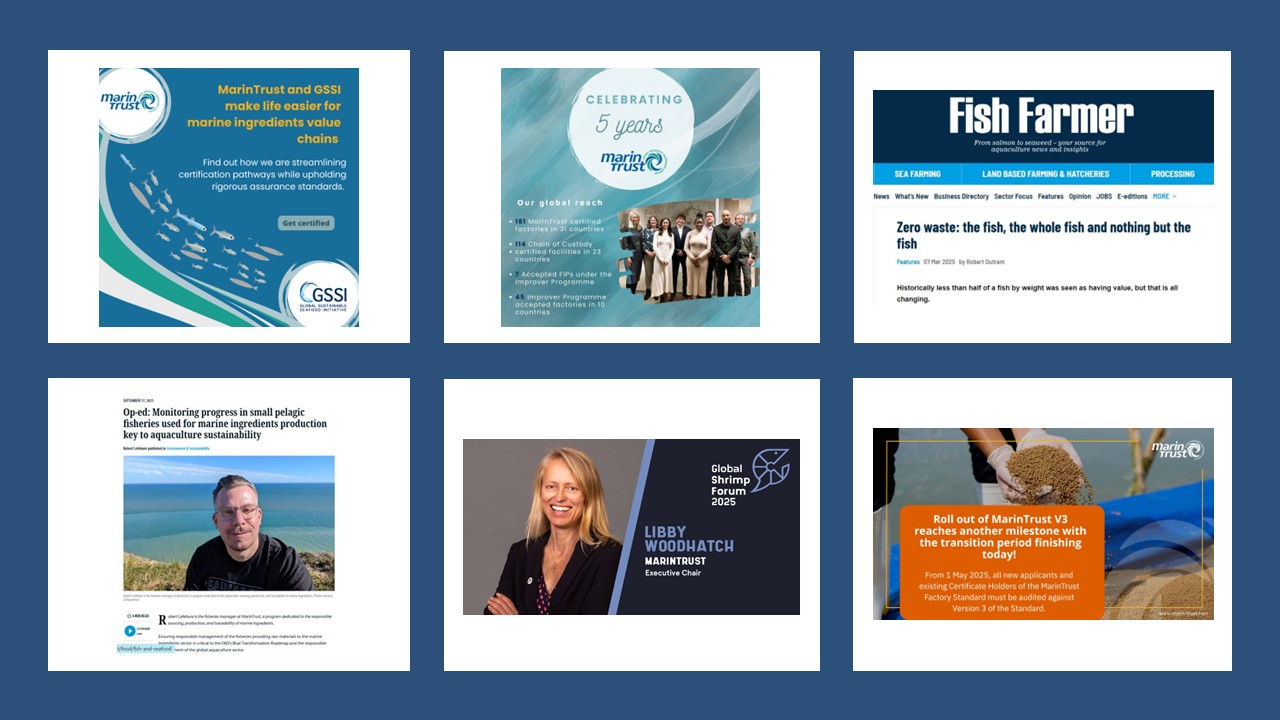
Mediante su participación en diversas plataformas de prensa y redes sociales, MarinTrust contribuye y lidera debates sobre los ingredientes marinos y el papel de las Normas. Durante el último año, MarinTrust ha recibido 60 noticias en los medios de comunicación a través de comunicados de prensa, entrevistas y editoriales de opinión. También se ha interactuado con grupos de interés más amplios en LinkedIn y Twitter, con un aumento de 500 seguidores hasta alcanzar los 3000 (en enero de 2026) y más de 2000 reacciones en LinkedIn..
…
Visitas a fábricas
Para supervisar y recopilar la opinión de los titulares de certificados, nuestro equipo realiza visitas a fábricas cada año. En 2025, el equipo visitó las siguientes fábricas:
- Pelagia Reino Unido – julio de 2025
- Pelagia Noruega – septiembre de 2025

Gobernanza
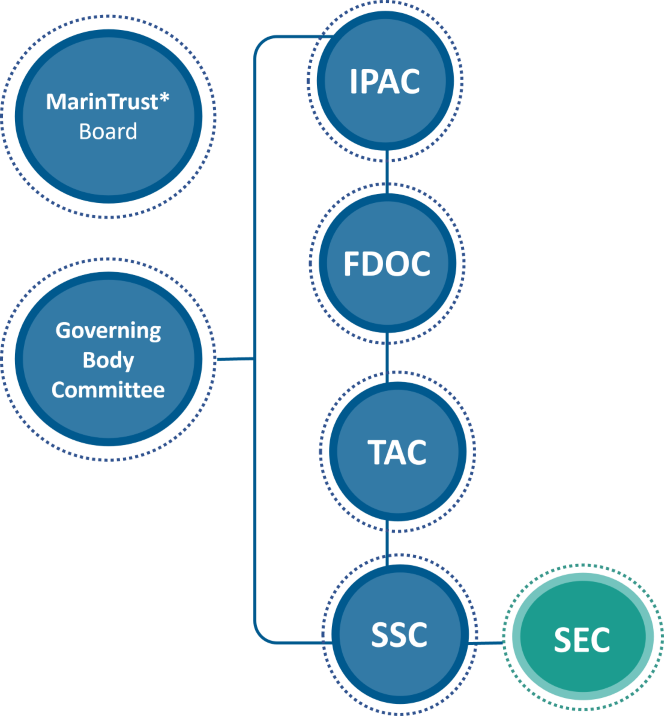
* -Marine Ingredients Certifications Ltd (09357209) opera el Programa MarinTrust, la empresa independiente líder en programa de certificación empresarial para la cadena de valor de ingredientes marinos.
Para averiguar quién forma parte de la Junta y los comités de MarinTrust, haga clic en lo siguiente



El Directorio de MarinTrust actúa como propietario del Programa MarinTrust y se asegura de que cumpla con todas las leyes de sociedades del Reino Unido. El deber de la Junta Directiva incluye la viabilidad financiera de la empresa. Esto incluye el establecimiento de todas las tarifas de registro que se realiza en consulta con el Comité de Gobernanza (GBC) de MarinTrust. Los miembros son::
- Libby Woodhatch (Chair)
- Petter Martin Johannessen
- Gonzalo de Romaña
- Brett Glencross
- Johannes Palsson
- Francisco Aldon (Company Secretary)
El Comité de Gobernanza de MarinTrust es un comité de múltiples partes interesadas compuesto por productores de ingredientes marinos, comerciantes, productores de alimentos para peces, piscicultores, procesadores de pescado, minoristas, ONG de conservación marina, representantes de estándares relacionados y el Director Técnico de IFFO. Los miembros son:
- Estelle Brennan (Labeyrie Fine Foods)
- Clarus Chu (WWF)
- Michiel Fransen (Aquaculture Stewardship Council)
- Dr Brett Glencross (IFFO)
- Eduardo Goycoolea (IFFO)
- Tor Eirik Homme (Grieg Seafood)
- Aisla Jones (Aquaculture Stewardship Council)
- Daniel Lee (Global Seafood Alliance)
- Dave Martin (Sustainable Fisheries Partnership)
- Dawn Purchase (Marine Conservation Society)
- Jorge Risi (IFFO)
- Dave Robb (Cargill)
- Stelios Stambolis (Distral)
- Frank Trearty (IFFO)
- Libby Woodhatch (MarinTrust) - Executive Chair
El Comité Directivo de Estándares (SSC) se estableció para apoyar al TAC utilizando su experiencia técnica para ayudar con el desarrollo y la revisión de los requisitos de certificación y la orientación técnica utilizada durante la auditoría de los Estándares de Certificación de MarinTrust. Los miembros son:
- Francisco Aldon (MarinTrust) - Chair
- Ken Corpron (Best Aquaculture Practices)
- Geraldine Fox (Pelagia)
- Andreas Nordgreen (TripleNine)
- Mike Platt (Global Dialogue on Seafood Traceability)
- Lindsay Pollock (Biomar)
- Didier Saplana (Austral)
La función del Comité de Supervisión del Desarrollo Pesquero (FDOC, por sus siglas en inglés) es desarrollar el proceso de revisión por pares de pesquerías y el mecanismo de aprobación de pesquerías para la certificación, gestionar los asuntos técnicos relacionados con el desarrollo, la revisión y la implementación de los criterios de evaluación de pesquerías del Estándar MarinTrust, incluidos la relevancia técnica e idoneidad del programa para su uso como un Programa de Certificación Acreditado por tercera parte. Los miembros son:
- Sophie des Clers (fisheries consultant) - Chair
- Stella Bartolini Cavicchi (OceanMind)
- Francisco Aldon (MarinTrust)
- Jose Peiro Crespo (Naunet, fisheries consultant)
- Pedro Veiga (Sustainable Fisheries Partnership)
- Polly Burns (Marine Stewardship Council)
- James Hinchcliffe (European Fishmeal and Fish Oil Producers)
- Caitlin Gilmour (Global Fishing Watch)


El MarinTrust GBC y el Comité de Aplicación al Programa de Mejoramiento (IPAC) trabajan juntos para desarrollar e implementar el Programa de Mejoramiento de MarinTrust (MarinTrust IP). El IPAC es un grupo de múltiples partes interesadas, basado en objetivos, representativo de la ciencia pesquera, la fabricación de harina de pescado, la cadena de suministro de alimentos y el medio ambiente. Los miembros son:
- Daniel Lee (Global Seafood Alliance)
- Francisco Aldon (MarinTrust) - Chair
- Indrani Lutchman (Sustainable Fisheries Partnership)
- Pham Viet Anh (Global G.A.P)
- Jorge Diaz Salinas (Skretting)
- Marcelo Hidalgo (Seafood Matter)
- Patricia Bianchi (Aquaculture Stewardship Council)
- Gemma Quilez-Badia (GTC-NSF)
La función del TAC, un grupo basado en objetivos, representante de la industria pesquera con un sólido conocimiento de las normas pertinentes, para gestionar asuntos técnicos relacionados con el desarrollo, revisión e implementación del Sistema de garantía MarinTrust como parte del Sistema de gestión de calidad (QMS ), incluida la pertinencia técnica y la idoneidad como programa de certificación acreditado de terceros. Los miembros son:
- Francisco Aldon (MarinTrust) - Chair
- Jose Llorente (NSF)
- Emma Matheson (BioMar)
- Kevin Edwards (Global Dialogue on Seafood Traceability)
- James Andrew Hart (Global G.A.P/FoodPLUS GmbH)
- Niall O'Rahelley (Sea Fisheries Protection Authority)
- Billy Hynes (Marine Stewardship Council)
El Comité Ético y Social (SEC) de MarinTrust se estableció para apoyar al TAC con el desarrollo y la implementación de criterios creíbles, sólidos y realistas centrados en los derechos humanos y el bienestar social dentro del Programa MarinTrust. Los miembros son:
- Birgitte Krogh-Poulsen (Independent social development consultant)
- Daniel Lee (Global Seafood Alliance)
- Dave Martin (Sustainable Fisheries Partnership)
- Estelle Brennan (Labeyrie Fine Foods)
- Gonzalo de Romaña (TASA)
- Libby Woodhatch (MarinTrust) - Chair
- Michiel Fransen (Aquaculture Stewardship Council)
- Amy McGann (Global Seafood Alliance)
- Ben Weis (Cargill)
El equipo
Con sede en Londres, el equipo de MarinTrust ha seguido prosperando y creciendo con el trabajo de Standard.
Nuevos miembros del equipo
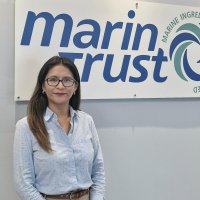 Elizabeth Inciso Velásquez - Gerente Técnica
Elizabeth Inciso es ingeniera pesquera y profesional en sostenibilidad con más de 10 años de experiencia en sistemas de gestión y esquemas de certificación de tercera parte. Como Gerente Técnica en MarinTrust, supervisa el desarrollo e implementación de los estándares, brinda soporte a los organismos de certificación y lidera la mejora continua en las operaciones del esquema. Su trayectoria incluye la gestión de sistemas integrados en empresas pesqueras y consultorías en certificaciones como ISO, GMP+, GFSI, BASC and MarinTrust. Tiene una Maestría en Gestión Integrada y maneja los idiomas: español, inglés y portugués..