

 Return to
MarinTrust certified and accepted facilities worldwide
The map below shows the global reach of MarinTrust, including facilities certified under the Factory Standard and Chain of Custody Standard, and facilities accepted under the Improver Programme.
For a full breakdown of MarinTrust certified and accepted facilities, and approved raw materials by country, expand the sections below.
Combined world production of MarinTrust compliant material
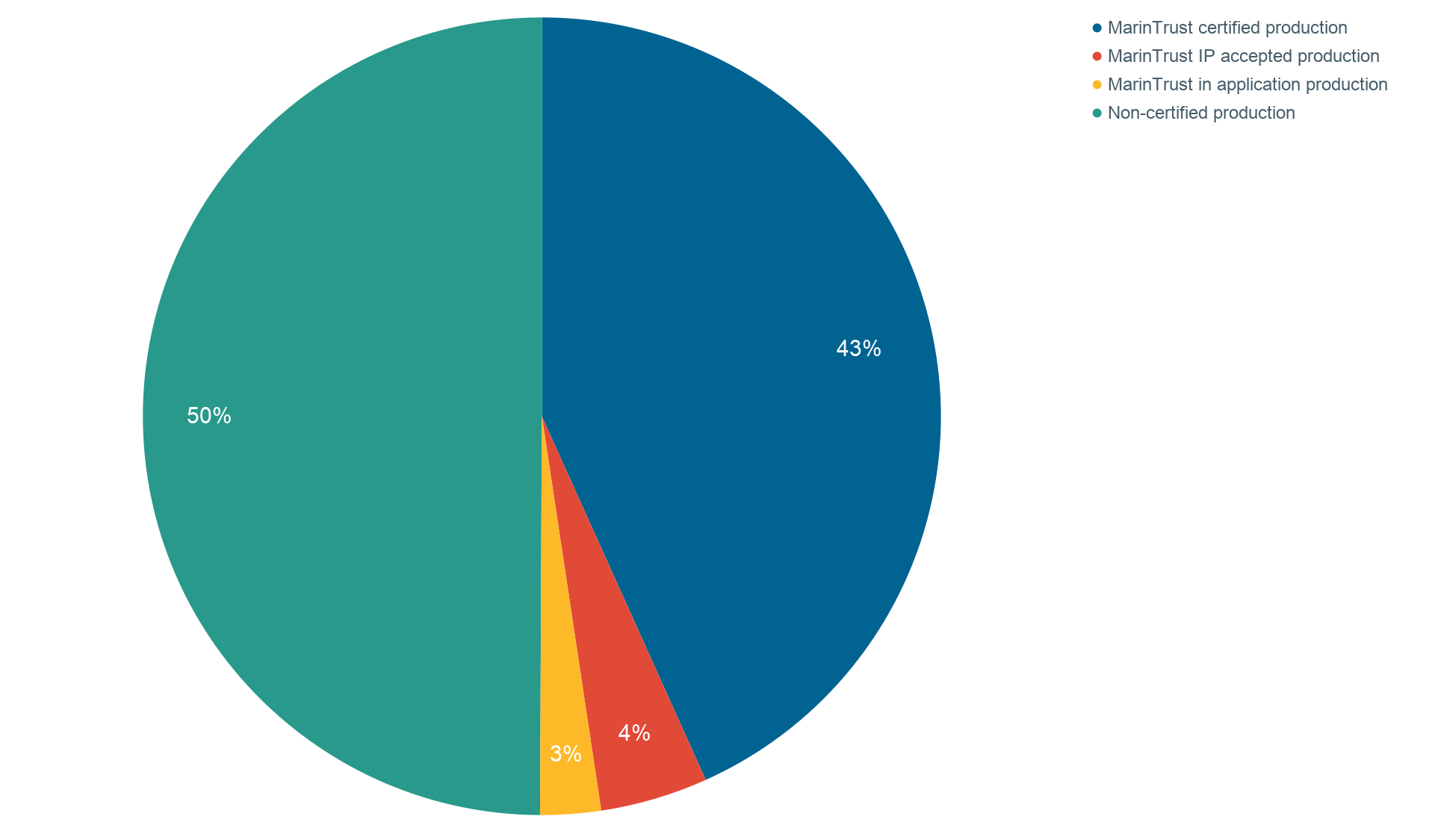
In 2025, MarinTrust Factory Standard certified facilities accounted for 43% of global fishmeal and fish oil production – representing around three million metric tonnes of the approximately seven million metric tonnes produced worldwide. When Improver Programme accepted production and facilities currently in application are included, this figure reaches 50% of global supply – reflecting the MarinTrust programme's continued significance in the global marine ingredients market.
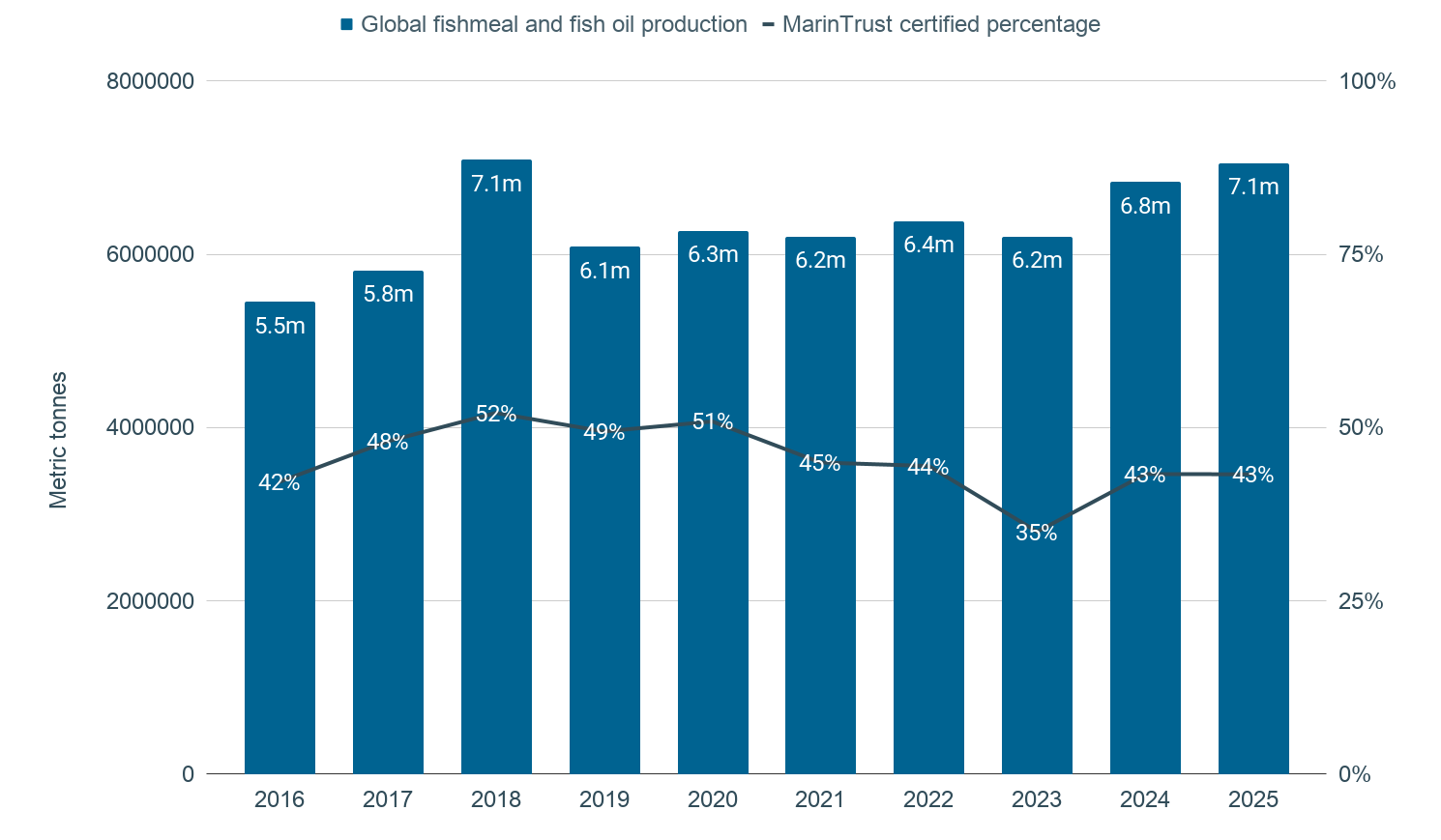
The below bar chart shows the global proportion of MarinTrust certified production over the last ten years.
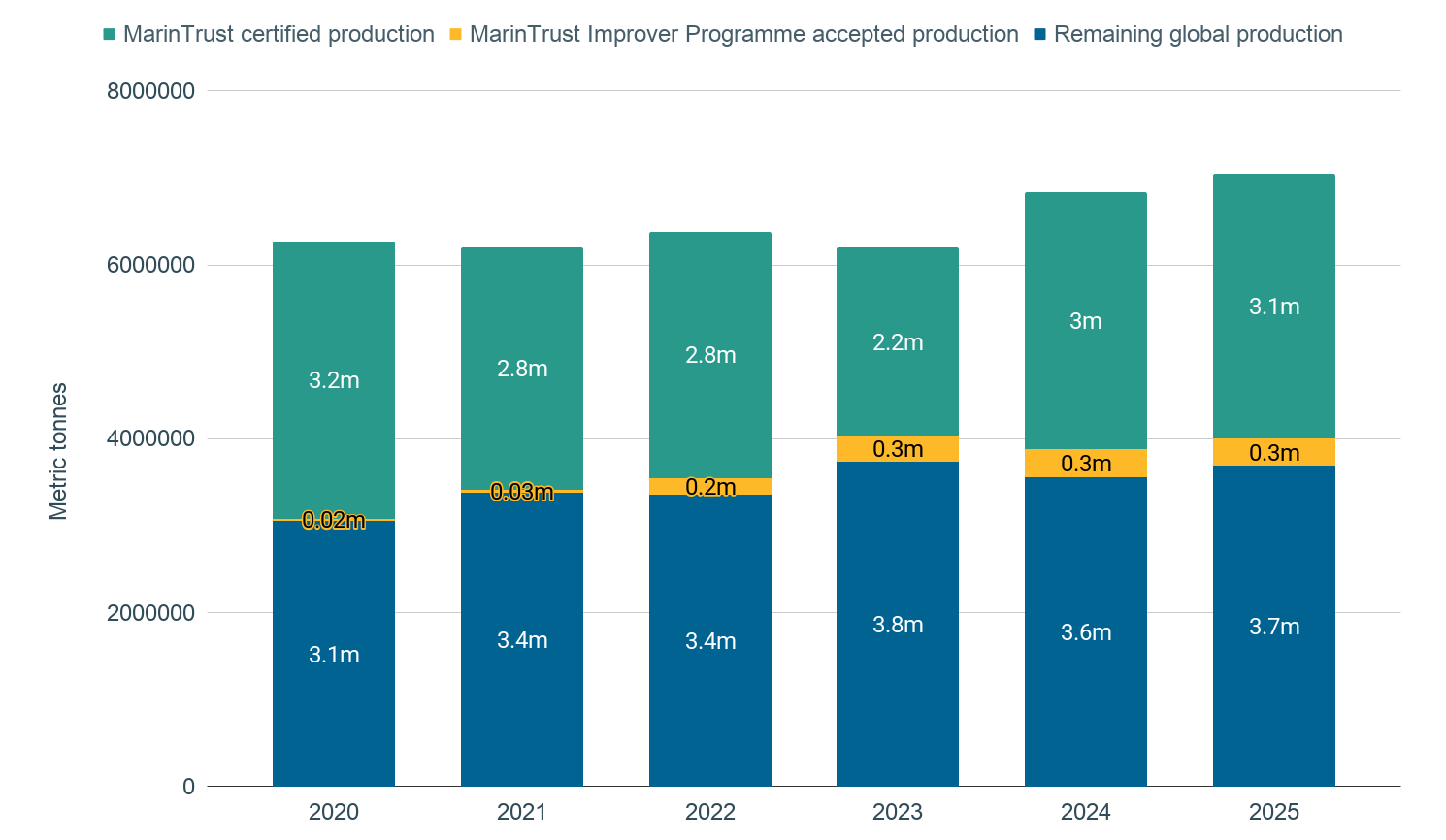
This chart shows the growing proportion of Improver Programme accepted production since 2020.
Global fishmeal and fish oil production fluctuates within a broadly consistent range, and MarinTrust certified production has tracked this pattern over time. The programme has grown substantially since its early years, when certified production represented less than 20% of global output, and has maintained a significant share of the market despite natural variation driven by environmental factors such as El Niño.
MarinTrust continued to expand its geographic footprint in 2025, with new certified facilities in Colombia, Ghana, Tunisia and Turkey – all first-time participants in the programme. Growth was also recorded in Chile, Indonesia, Morocco and Poland. While the newest entrants are relatively small producers, their participation reflects the broadening global recognition of MarinTrust certification as a benchmark for responsible marine ingredient production.
In 2025, MarinTrust also recorded 106,000 metric tonnes of other marine ingredients production (e.g. hydrolysates). This figure has grown year on year, reflecting the programme's expanding scope beyond fishmeal and fish oil.