

 Return to
 (21 April 2026) MarinTrust joined discussions at a panel at Seafood Expo Global in Barcelona, with Executive Chair Libby Woodhatch stating that "certification is all about continuous improvement and balance between credibility and accessibility. Introducing the Standard, Woodhatch added that "Certification against the MarinTrust standards represent 45% of global marine ingredients production and the fishery assessment is a prerequisite and aligned with the FAO Code of Conduct for Responsible Fisheries, with fishery assessment for by-products also undergoing a risk based assessment. If a source fishery is lacking data it can apply for the Improver Programme which can help increase accessibility thanks to time bound improvements and fishery action plans."
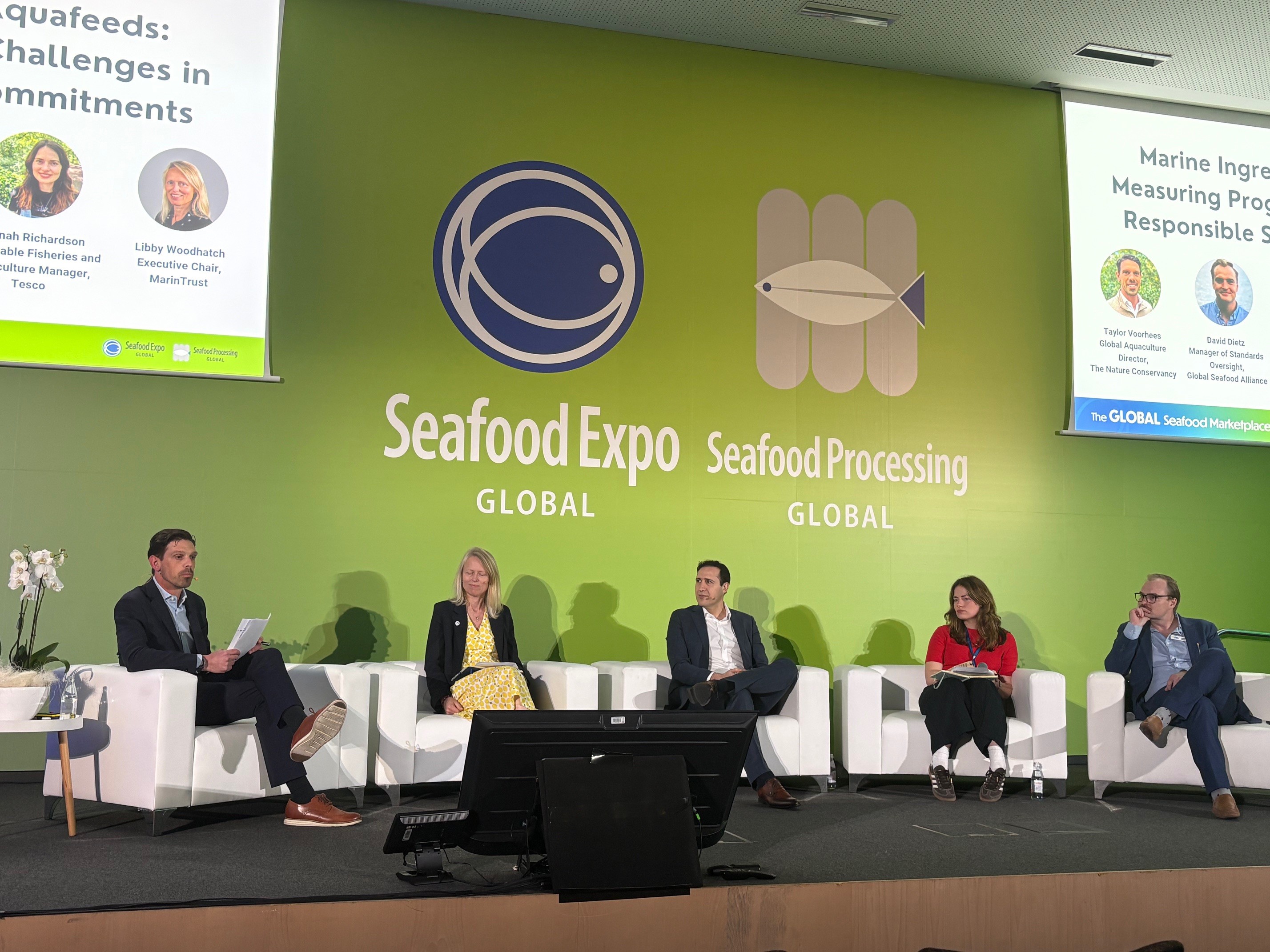
The session was moderated by Taylor Voorhees, Global Aquaculture Director at The Nature Conservancy, and also featured Jorge Díaz (Skretting), David Dietz (Global Seafood Alliance) and Hannah Richardson (Tesco) who addressed value chain expectations and sourcing policies. David Dietz stated that what is lacking is an industry level view of progress and challenges, noting that "having better data transparency across the value chain, knowing where responsible volumes are growing or decreasing so we don't have a small amount of winners and losers in other parts of the chain."
Hannah Richardson highlighted that Tesco is looking for data and evidence, "Tesco has a welfare programme with certain criteria in place like MarinTrust certification or GSSI. We don’t expect perfection but rather willingness to engage. We want to make sure we’re bringing everyone on that journey with us."
From a feed producer perspective, Jorge Diaz explained that Skretting has a sourcing policy whereby it aims to source 100% of its marine ingredients responsibly by end of 2030. He added that "the amount of data and the level of details Skretting is requested to deliver is increasing. Certification programmes help deliver the data." Diaz insisted that marine ingredients will remain essential, "as long as they come from responsible sources we will always prefer marine ingredients. We want to be competitive so we also need to increase the bar for other ingredients as well, and for other proteins". Diaz added. Woodhatch concluded that more realism in data requirements is needed and marine ingredients remain a blind spot in the seafood sector.